Research in Practice
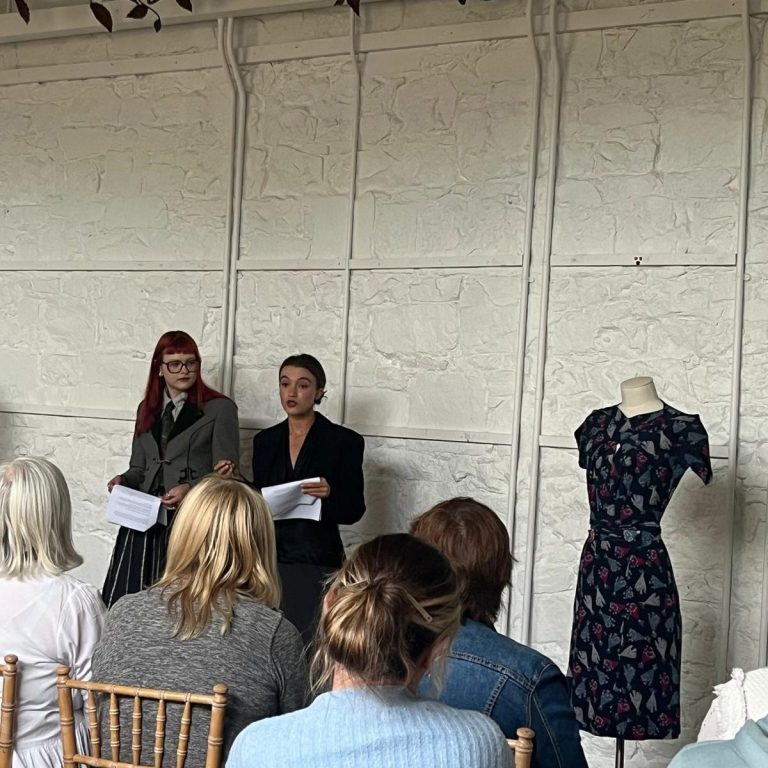
For me, historical fashion research is at its most rewarding when it can be shared. Objects and archives have the capacity to tell extraordinary stories, but those stories should not remain confined to academic writing. Through talks, guided tours and conference presentations, I explore ways of translating detailed research into engaging experiences that invite people to look at clothing differently.
At Birr Castle, my research into Anne, Countess of Rosse’s 1930s wardrobe informed a series of talks and guided tours centred on the surviving dresses in the collection. Bringing the garments into the castle’s reception rooms offered an opportunity to discuss their designers, textiles and construction while placing them within the wider context of Anne’s life. The tours were designed to make the research accessible to visitors, encouraging them to look closely at the clothes and consider the histories held within them.
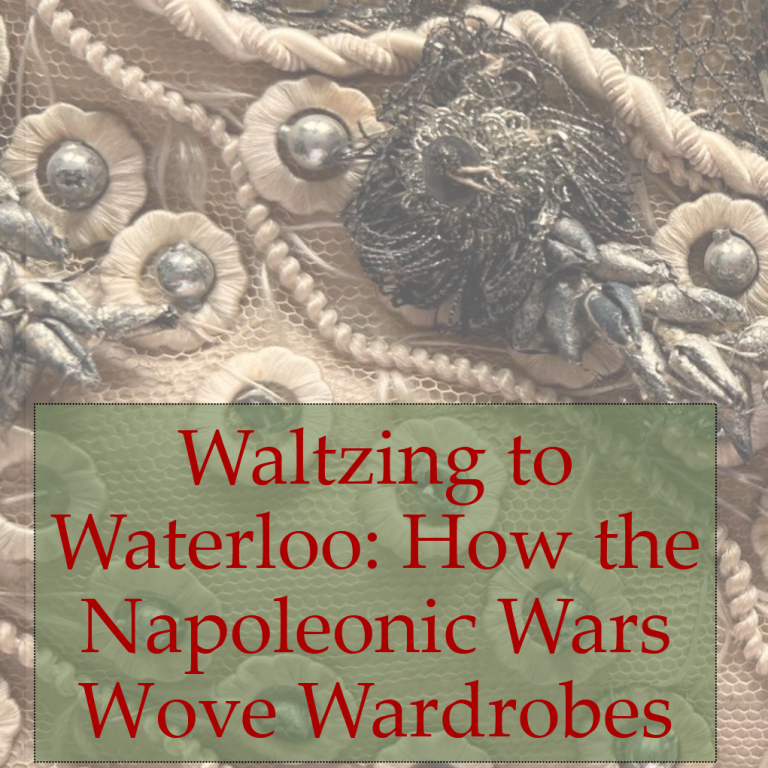
My public engagement work has also explored the relationship between dress and significant historical events. A talk on a 1815 dress possibly worn at the examined the connections between a surviving garment and the history of the Battle of Waterloo, using clothing as a starting point for a wider conversation about the past.
Alongside this public-facing work, I presented research alongside my colleague at the Dress and Textile Specialists (DATS) conference in a paper titled Conserving the Surreal and the Novel: Pattern in Charles James’s 1930s Daywear. Focusing on the Cocteau and Snow White dresses, the presentation explored the relationship between printed textiles, design and the interpretation of historical garments.
These projects reflect my interest in moving between detailed academic research and public interpretation. Whether examining a dress in an archive, discussing an object with visitors in a historic house or presenting research to fellow specialists, I aim to communicate complex ideas clearly without losing the nuances that make historical objects so compelling.
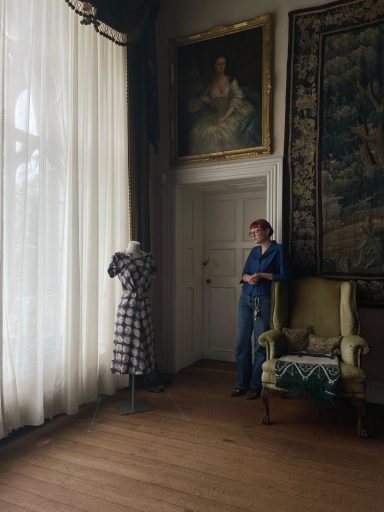
I believe that fashion history should be both rigorous and accessible. A garment can provide a starting point for conversations about art, identity, social history and everyday life, reaching audiences who might not otherwise encounter these subjects. Through talks, tours and collaborative projects, I hope to make the stories held within clothing collections meaningful, engaging and open to a wider public.